Fishing-Focused Layouts
A true fishing boat is designed around the needs of the angler. Unlike general-purpose recreational boats, the layout of a fishing vessel prioritizes unhindered movement, practical surfaces, and specialized storage. The goal is to create a platform where deploying gear, fighting a fish, and landing a catch can be done safely and efficiently without navigating around unnecessary seating or styling elements.
Crucial Deck Space and Usability
The most important asset on a fishing boat is clear deck space. Center console designs are incredibly popular because they allow an angler to walk 360 degrees around the boat while fighting a fish. The decks are typically self-bailing (allowing water to drain overboard) and coated in aggressive non-skid textures to maintain safety in wet conditions. Gunwales (the upper edge of the hull) are designed to a height that provides security while still allowing easy access to the water.
Storage and Equipment Mounting
Dedicated storage solutions separate fishing boats from standard vessels. Key features often include:
- Rod Storage: Secure horizontal racks under the gunwales, vertical holders on the console, and rocket launchers on a T-top ensure valuable gear is protected but accessible.
- Livewells: Aerated water tanks designed to keep baitfish alive and healthy during the trip.
- Fishboxes: Insulated, drainable compartments built into the deck for storing the catch with ice.
- Equipment Mounting: Reinforced areas on the console and dash designed specifically for mounting large fish-finding sonar units and GPS navigation equipment.
Stability Considerations
When multiple anglers move to one side of the boat to land a fish, the vessel must remain stable. Fishing boats often feature wider beams (width) relative to their length to provide this necessary static stability. The hull design must strike a balance between providing a smooth ride through rough chop (often requiring a deep-V hull) and remaining stable while adrift or anchored.
Freshwater vs. Coastal Use
It is important to select a boat suited for your intended environment. Coastal and offshore vessels typically require higher freeboard (distance from water to gunwale), self-bailing decks, and deep-V hulls to handle ocean swells. Freshwater or inland vessels, such as bass boats or flat-bottomed skiffs, prioritize shallow draft to access tight waterways and often feature extensive casting platforms rather than deep cockpits.
Example Inventory
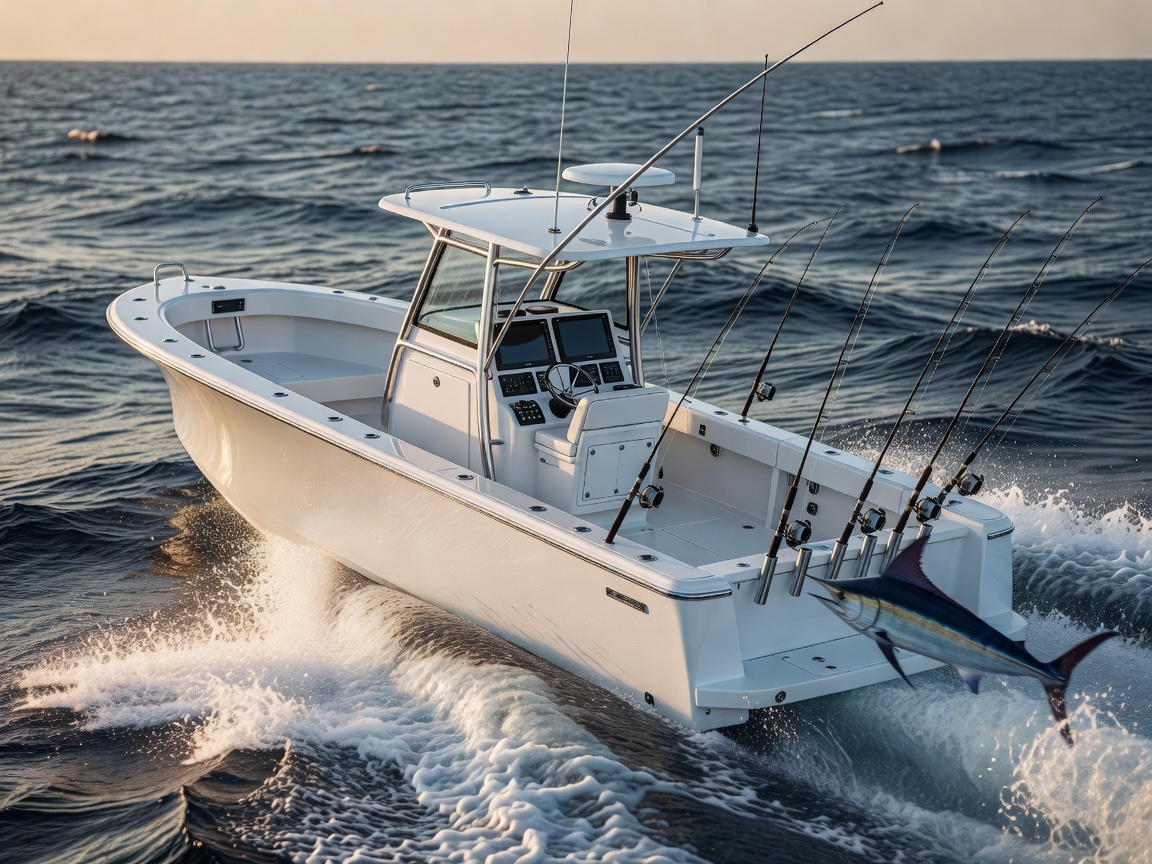
Offshore Center Console (Illustrative)
A rugged, open layout featuring extensive rod holders, insulated fishboxes, and a deep-V hull for coastal waters.
- Layout Center Console
- Key Feature Aerated Livewell
- Environment Coastal